
+12012030360

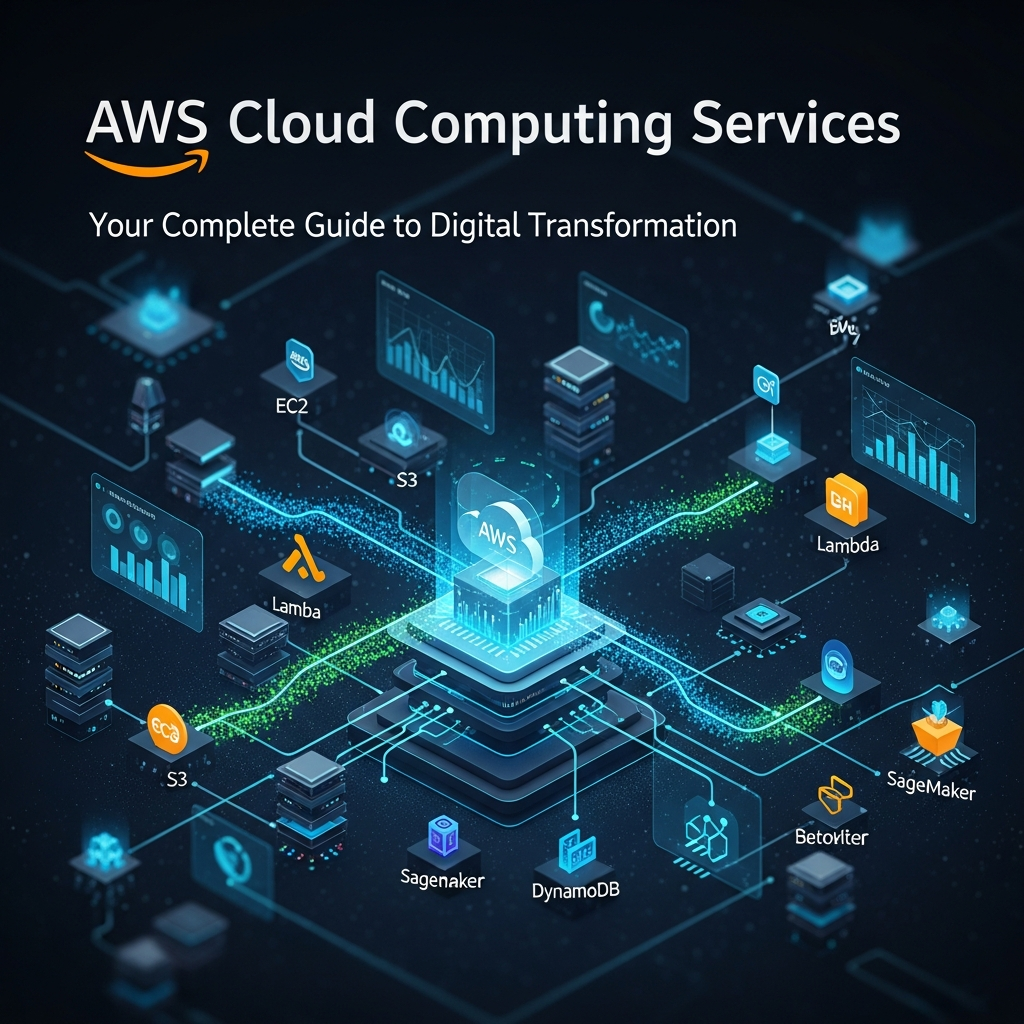
Amazon Web Services (AWS) has revolutionized how businesses operate, offering a comprehensive suite of cloud computing solutions that power organizations from startups to Fortune 500 companies. As the leading cloud platform, AWS enables businesses to scale rapidly, reduce costs, and innovate faster than ever before.
Understanding AWS Cloud Computing
AWS cloud computing delivers on-demand IT resources over the internet with flexible pay-as-you-go pricing. Instead of purchasing and maintaining expensive physical servers, businesses access computing power, storage, databases, and advanced services instantly. This shift from capital expenditure to operational expenditure has transformed how companies approach IT infrastructure.
At Informatics360, we help businesses across the USA, UK, and Europe leverage AWS to drive digital transformation and achieve measurable growth.
Essential AWS Services for Modern Businesses
1. Amazon EC2: Scalable Virtual Servers
Amazon Elastic Compute Cloud (EC2) provides resizable compute capacity in the cloud. Launch virtual servers in minutes and scale up or down based on demand. EC2 offers hundreds of instance types optimized for different workloads, from web hosting to machine learning.
Key advantages include:
- Launch instances in under five minutes
- Pay only for running instances
- Auto-scaling based on traffic patterns
- Multiple operating systems and configurations
2. Amazon S3: Unlimited Object Storage
Simple Storage Service (S3) delivers secure, durable object storage with industry-leading availability. Store and retrieve unlimited data from anywhere while paying only for what you use.
Common use cases:
- Backup and disaster recovery solutions
- Content distribution for websites and applications
- Big data analytics and data lakes
- Compliance archiving
- Static website hosting
Learn more about implementing robust disaster recovery strategies with AWS.
3. Amazon RDS: Managed Database Services
Relational Database Service (RDS) simplifies database administration, offering automated backups, software patching, and scaling. Support for MySQL, PostgreSQL, Oracle, SQL Server, and Amazon Aurora ensures compatibility with existing applications.
Benefits include:
- Automated daily backups and point-in-time recovery
- Multi-availability zone deployments for high availability
- Read replicas for improved performance
- Automated software patching and updates
4. AWS Lambda: Serverless Computing
Lambda revolutionizes application development by running code without managing servers. Execute functions in response to events and pay only for compute time consumed. Perfect for microservices architectures and event-driven applications.
Ideal for:
- Real-time file and data processing
- API backends and webhooks
- IoT device communication
- Automated workflows and batch processing
5. Amazon VPC: Secure Networking
Virtual Private Cloud (VPC) provides isolated network environments within AWS. Control IP address ranges, create subnets, configure route tables, and establish secure connections to on-premises infrastructure.
Why Choose AWS for Cloud Migration?
Migrating to AWS offers transformative benefits for businesses of all sizes. Our cloud migration services ensure seamless transitions with minimal disruption.
Business advantages:
Global Infrastructure: AWS operates 32 geographic regions with 102 availability zones, ensuring low latency and high availability worldwide.
Enterprise Security: AWS provides comprehensive security features and compliance certifications including GDPR, HIPAA, PCI DSS, and SOC 2. Explore our cloud security solutions to protect your business.
Cost Optimization: Multiple pricing models including on-demand, reserved instances, and spot instances help optimize spending while maintaining performance.
Innovation Access: Leverage cutting-edge technologies including artificial intelligence, machine learning, IoT, and quantum computing without massive upfront investments.
Advanced AWS Capabilities
Multi-Cloud and Hybrid Solutions
AWS excels in hybrid and multi-cloud environments, allowing businesses to integrate on-premises infrastructure with cloud services seamlessly. Our hybrid and multi-cloud consulting helps organizations choose the right deployment model.
Data and AI Integration
AWS offers comprehensive services for data analytics and artificial intelligence. Amazon SageMaker simplifies machine learning model development, while services like Redshift, Athena, and EMR enable powerful data analysis. Learn how we leverage Data and AI services to drive business insights.
DevOps and Automation
AWS provides robust tools for continuous integration and deployment. Services like CodePipeline, CodeBuild, and CodeDeploy streamline software delivery while maintaining quality and security standards.
Getting Started with AWS
Step 1: Assessment and Planning Begin with a comprehensive cloud readiness assessment. Identify which workloads are suitable for migration and develop a strategic roadmap aligned with business objectives.
Step 2: Choose Your Migration Strategy Select the appropriate approach based on your applications and timeline. Options include lift-and-shift for quick migrations, replatforming for some optimization, or refactoring for maximum cloud-native benefits.
Step 3: Implement Security Best Practices Enable multi-factor authentication, implement least privilege access using IAM, encrypt data at rest and in transit, and establish comprehensive logging with CloudTrail.
Step 4: Optimize and Scale Use AWS Cost Explorer and Trusted Advisor to continuously optimize resources. Implement auto-scaling policies and right-size instances based on actual usage patterns.
Informatics360: Your AWS Cloud Partner
At Informatics360, we specialize in comprehensive cloud consulting services that drive measurable business outcomes. With offices in the USA, UK, and Scotland, we deliver global expertise with local support.
Our AWS services include:
- Cloud strategy and consulting
- Complete migration services
- Security and compliance implementation
- Managed cloud services and 24/7 support
- Cost optimization and performance tuning
As certified AWS experts, we’ve helped organizations across industries modernize their infrastructure, improve security posture, and reduce operational costs by up to 40%. Whether you’re launching your first cloud application or managing complex multi-cloud environments, we provide the expertise and support needed for success.
Real-World Business Impact
Organizations leveraging AWS report significant improvements across key metrics. Companies typically see 30-50% reduction in infrastructure costs, 60% faster application deployment, and improved system reliability with 99.99% uptime. These improvements translate directly to competitive advantages and accelerated business growth.
Conclusion
AWS cloud computing services provide the foundation for modern digital operations. From startups requiring rapid scaling to enterprises modernizing legacy systems, AWS offers the tools and flexibility needed to succeed. However, success requires more than just choosing the right services it demands strategic planning, proper implementation, and ongoing optimization.
Partner with Informatics360 to transform your AWS journey into measurable business success. Our certified consultants provide end-to-end support from initial assessment through ongoing management, ensuring your cloud infrastructure drives innovation and growth.
Ready to unlock the full potential of AWS? Contact our cloud experts today for a free consultation and discover how we can help your business thrive in the cloud-first era. Whether you need help with cloud migration, security, or ongoing managed services, we’re here to guide you every step of the way.