
+12012030360

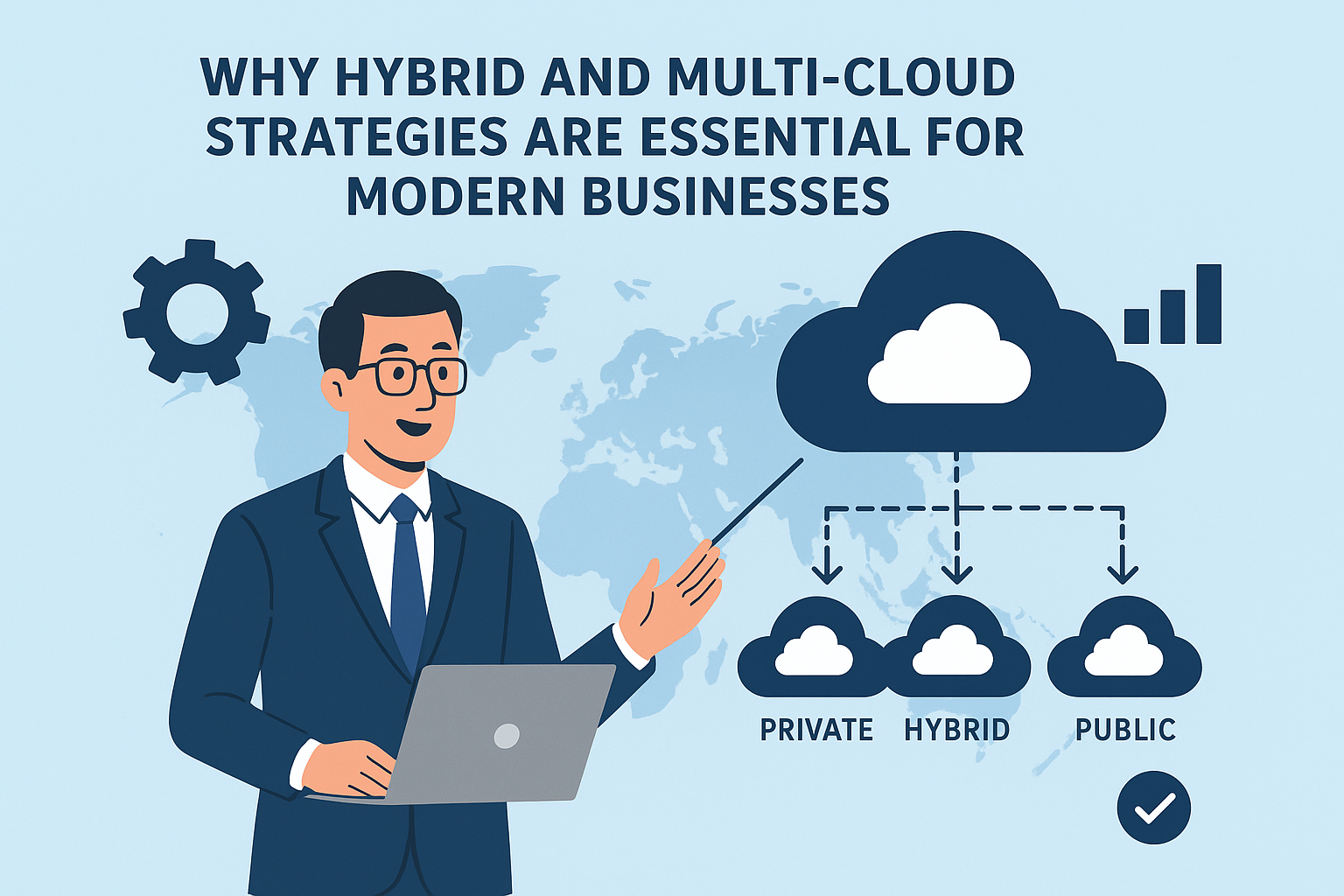
In today’s fast-paced digital era, businesses are under constant pressure to innovate, scale quickly, and stay competitive. Cloud computing has become the foundation for this transformation, but relying on a single cloud provider is no longer enough. Modern businesses demand flexibility, resilience, and control and that’s where hybrid and multi-cloud strategies come in.
At Informatics360, we help enterprises and growing businesses design, implement, and optimize hybrid and multi-cloud environments that support innovation while keeping costs and risks under control. Whether it’s managing compliance-sensitive workloads or integrating multiple cloud vendors, hybrid and multi-cloud infrastructures provide the perfect balance of performance, security, and scalability.
Understanding Hybrid and Multi-Cloud Architectures
Before diving into the benefits, it’s crucial to understand what hybrid and multi-cloud strategies actually mean, and how they differ.
What is a Hybrid Cloud?
A hybrid cloud combines private (on-premises or hosted) infrastructure with one or more public cloud services. It enables data and applications to move seamlessly between environments, giving businesses greater control over their workloads and data security.
For example, sensitive data can remain in a private cloud for compliance purposes, while less-critical workloads can run in the public cloud for cost efficiency.
What is Multi-Cloud?
A multi-cloud strategy uses multiple cloud service providers, such as AWS, Microsoft Azure, and Google Cloud to distribute workloads strategically. This prevents dependency on a single vendor and allows organizations to use the best services each provider offers.
Hybrid vs. Multi-Cloud: Key Difference
- Hybrid Cloud: Combines private and public environments.
- Multi-Cloud: Uses two or more public cloud platforms.
Many organizations actually use both together creating a hybrid multi-cloud architecture that provides maximum flexibility and efficiency.
The Growing Need for Cloud Flexibility
As businesses continue their digital transformation, flexibility has become a critical success factor. A one-size-fits-all cloud model no longer works.
Companies now need to:
- Scale operations dynamically to meet customer demand.
- Ensure uptime across global markets.
- Balance security, compliance, and cost optimization.
For example, a financial organization might store client data securely in a private cloud while using AWS for analytics and AI workloads. Meanwhile, an eCommerce brand could rely on Azure for scalability during holiday seasons and Google Cloud for personalized marketing campaigns.
This flexibility is only possible with hybrid and multi-cloud setups where businesses can deploy, move, and manage workloads wherever they perform best.
Benefits of Hybrid and Multi-Cloud Strategies
Adopting a hybrid and multi-cloud approach isn’t just a technical upgrade it’s a strategic business move. Here’s why forward-thinking companies are embracing this model.
1. Avoiding Vendor Lock-In
Relying on a single cloud provider can limit innovation and increase costs over time.
With a multi-cloud strategy, businesses can switch between providers or use specific services that best meet their needs ensuring complete freedom and negotiating power.
2. Enhanced Security and Compliance
Data privacy regulations like GDPR require careful management of where data resides.
Hybrid environments allow businesses to store sensitive information in private or on-premise systems while leveraging the scalability of public clouds for less critical tasks.
This dual model ensures both security and regulatory compliance.
3. Optimized Cost Efficiency
Hybrid and multi-cloud setups enable organizations to run workloads where they’re most cost-effective.
For example, high-performance computing tasks may run on AWS, while long-term data storage can move to Azure’s cheaper archival tiers.
By optimizing workloads across platforms, companies save significantly on infrastructure costs.
4. Improved Performance and Reduced Latency
Distributing workloads across global cloud providers ensures faster delivery and reduced downtime.
Multi-cloud strategies allow organizations to deploy applications closer to their users — improving speed, availability, and customer satisfaction.
5. Business Continuity and Disaster Recovery
A hybrid multi-cloud model provides redundancy. If one cloud provider experiences downtime, services can seamlessly fail over to another environment.
This built-in resilience ensures continuous operations and minimizes the risk of catastrophic data loss.
Challenges and How to Overcome Them
While hybrid and multi-cloud architectures offer tremendous advantages, they also introduce some challenges especially for organizations without in-house expertise.
1. Complex Management Across Multiple Platforms
Each cloud provider has its own tools, APIs, and configurations. Managing them simultaneously can become complex.
Informatics360 helps simplify this through centralized cloud management dashboards, automation scripts, and unified policies ensuring smooth operations across all platforms.
2. Data Transfer and Integration Issues
Transferring data between clouds can be expensive and slow if not managed properly. Our consultants design optimized architectures that minimize data transfer costs and latency.
3. Security and Access Control
Multiple environments mean multiple access points increasing potential vulnerabilities.
Informatics360 enforces identity management, zero-trust security, and continuous monitoring to ensure all cloud components stay secure.
4. Skill Gaps and Lack of Cloud Strategy
Many organizations adopt cloud technologies without a defined roadmap.
At Informatics360, our cloud consulting services provide clear frameworks for adoption from initial strategy and design to ongoing governance and optimization.
Real Business Impact of Hybrid and Multi-Cloud Adoption
Companies across industries are realizing tangible benefits from hybrid and multi-cloud transformation.
Case Example 1: Retail Sector
A European retail company wanted to improve customer personalization.
By deploying AI-driven analytics on Google Cloud and maintaining transactional systems on AWS, they reduced processing times by 40% and improved customer engagement by 25%.
Case Example 2: Financial Services
A fintech company in London leveraged hybrid cloud for data security and performance.
Private cloud was used for sensitive financial data, while Azure handled mobile app scalability.
This setup achieved 99.99% uptime while meeting GDPR compliance standards.
Case Example 3: Manufacturing
A French manufacturing firm used Informatics360’s cloud consulting to migrate production analytics to a hybrid multi-cloud model.
The result: faster production insights, cost savings, and real-time monitoring from multiple locations.
Why Informatics360 is the Right Partner for Cloud Transformation
Informatics360 specializes in helping businesses harness the power of the cloud through customized strategies that deliver measurable results.
Our services include:
- Cloud Consulting & Strategy – Tailored assessments and migration planning.
- Hybrid & Multi-Cloud Integration – Seamless connectivity across AWS, Azure, and Google Cloud.
- Cloud Migration Services – Safe, secure, and efficient transition to cloud environments.
- Managed Cloud Services – Continuous optimization, monitoring, and support for maximum uptime.
We ensure that every cloud setup is aligned with your business goals whether that means cutting costs, improving performance, or unlocking innovation.
🔗 Explore our dedicated Hybrid and Multi-Cloud Consulting Services to discover how Informatics360 can transform your cloud infrastructure.
The Future of Cloud: Integration, Automation & Intelligence
The next generation of cloud infrastructure is AI-driven and autonomous.
Intelligent cloud orchestration tools are already helping businesses automatically manage resources, predict failures, and self-optimize workloads.
Meanwhile, edge computing is reshaping hybrid models enabling real-time data processing closer to users for faster decision-making.
Businesses that embrace hybrid and multi-cloud today will be better equipped to leverage these emerging technologies tomorrow.
Conclusion
Hybrid and multi-cloud strategies are no longer optional they’re essential for modern businesses seeking agility, security, and innovation.
By combining the best of public and private clouds, organizations can scale efficiently, manage data securely, and adapt faster to market demands.
With Informatics360’s cloud consulting expertise, your business can move beyond traditional IT constraints and build a future-ready cloud ecosystem designed for growth, resilience, and digital excellence.